
The cryptocurrency trading landscape has become increasingly crowded in recent years, with new platforms emerging almost weekly, each promising sophisticated tools, institutional-grade security, and returns that sound almost too good to be true. Against this backdrop of noise and hype, Ligocu Betfandecs positions itself as a comprehensive trading platform offering multi-market access, AI-driven strategies, and a user experience designed for both beginners and seasoned traders. But does it deliver on these promises, or is it another platform making bold claims it cannot substantiate?
After examining the platform's structure, features, and public positioning, this review aims to provide an honest assessment of what Ligocu Betfandecs actually offers, where it succeeds, and where prospective users should proceed with caution.
The Platform's Core Proposition
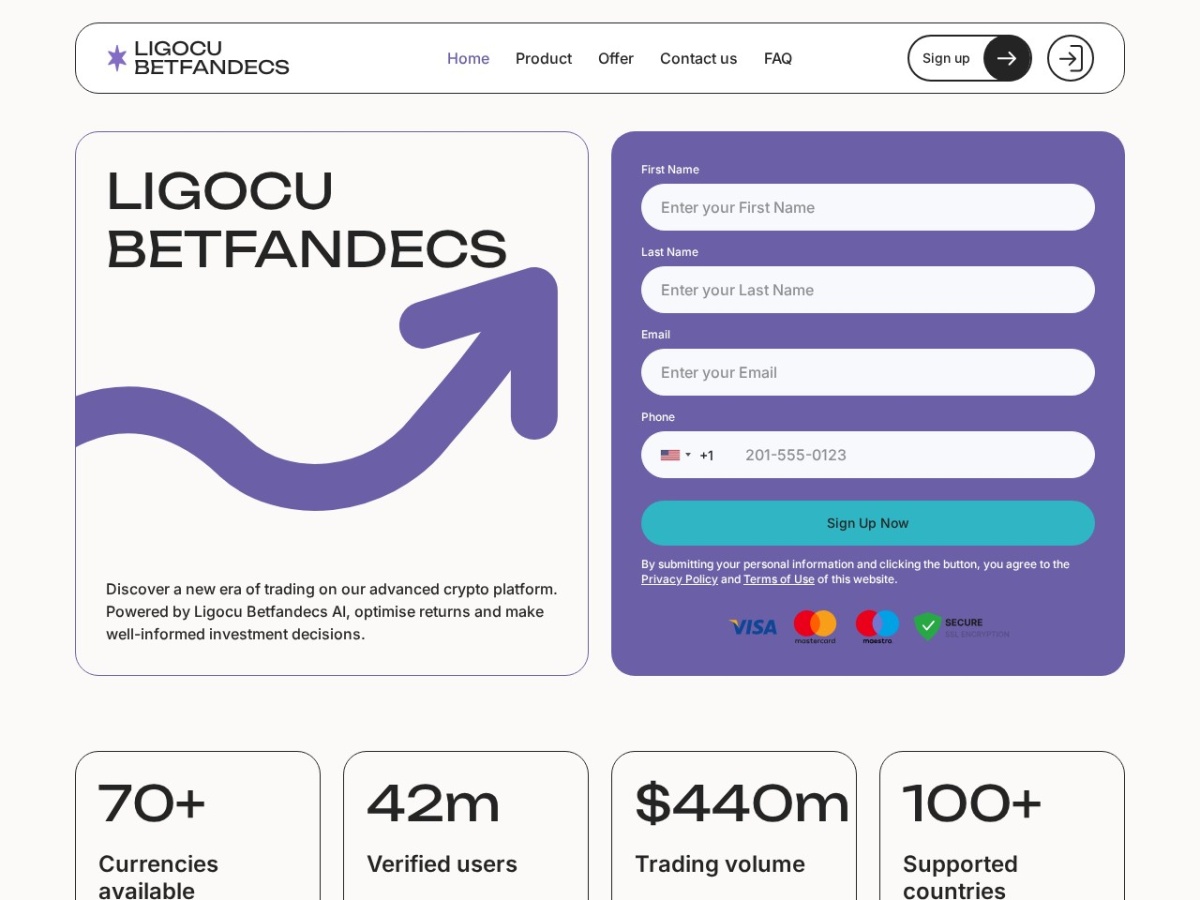
Ligocu Betfandecs presents itself as a global trading platform built around integrated infrastructure that supports cryptocurrencies, forex, equities, and commodities within a single environment. The platform claims to serve over forty-two million verified users across more than one hundred countries, with a trading volume exceeding four hundred and forty million dollars. These numbers, if accurate, would position the platform as a significant player in the retail trading space, though independent verification of such metrics remains difficult without third-party audits or transparent reporting mechanisms.
The platform's marketing emphasizes several core pillars: security, personalization, AI-powered trading strategies, automated trading capabilities, and a clean, intuitive interface. These are not unique selling points in the modern trading ecosystem, but their execution matters far more than their mere presence. The question is whether Ligocu Betfandecs implements these features with the depth and reliability necessary to justify user trust and capital commitment.
The minimum deposit requirement stands at two hundred and fifty euros, a threshold that sits comfortably within industry norms. It is neither prohibitively high nor suspiciously low, which at least suggests the platform is targeting serious users rather than attempting to lure in casual experimenters with unrealistic promises of instant wealth from minimal stakes.
User Experience and Onboarding
One area where Ligocu Betfandecs appears to have invested effort is the onboarding process. The platform describes a streamlined six-step journey from registration through to active trading. Account creation is reportedly completed within minutes, requiring basic personal details and email verification to unlock full platform access. The emphasis on speed and simplicity reflects an understanding that friction in the early stages drives away potential users, particularly those new to trading.
However, this simplicity raises questions about the depth of know-your-customer procedures and compliance with financial regulations across the hundred-plus countries the platform claims to serve. Legitimate trading platforms operating at scale must navigate complex regulatory frameworks, implement robust identity verification, and comply with anti-money-laundering standards. While Ligocu Betfandecs mentions verification steps, the specifics of these processes and their alignment with regulatory requirements in various jurisdictions remain unclear from publicly available information.
The platform offers multiple funding methods including bank transfers, e-wallets, and credit cards, which provides flexibility for users in different regions. Withdrawal processing is stated to take between one and three business days depending on the chosen method, with fees and timelines disclosed upfront. This transparency around withdrawal conditions is important, as opaque or deliberately complex withdrawal processes are common red flags in fraudulent platforms.
AI and Automation Claims
Perhaps the most ambitious aspect of Ligocu Betfandecs is its emphasis on artificial intelligence and automated trading. The platform promotes AI-driven trading engines, automated bots operating around the clock, and claims of up to eighty-five percent accuracy in trading performance. These are extraordinary assertions that demand careful scrutiny.
The eighty-five percent accuracy figure is particularly problematic. Accuracy in trading is not a straightforward metric. Does it refer to the percentage of profitable trades, the accuracy of price predictions, or some other measure? Without context, methodology, or independent verification, such numbers can be misleading at best and deceptive at worst. Professional traders and institutional investors understand that consistent profitability depends on risk management, position sizing, market conditions, and numerous other variables that cannot be reduced to a single accuracy percentage.
AI-powered trading tools have become increasingly sophisticated, and their application in financial markets is legitimate and growing. However, the effectiveness of such systems varies enormously based on the underlying algorithms, the quality and breadth of training data, the speed of execution infrastructure, and the ability to adapt to changing market conditions. Ligocu Betfandecs provides little detail about the specific AI methodologies it employs, the research and development behind its algorithms, or the performance benchmarks against which these systems have been tested.
The promise of twenty-four-seven automated trading through AI-driven bots is appealing, especially for retail traders who cannot monitor markets continuously. Yet automation introduces its own risks. Poorly designed algorithms can amplify losses during volatile market conditions, and even sophisticated systems can fail when confronted with unprecedented market events. The platform's emphasis on customization suggests users can configure risk parameters and trading preferences, which is essential for responsible automation, but the effectiveness of these safeguards depends entirely on implementation quality that cannot be assessed from marketing materials alone.
Security Infrastructure
Security is presented as a foundational element of the Ligocu Betfandecs platform. The company states it employs SSL encryption, two-factor authentication, cold storage for funds, and secure transaction processing through trusted providers. These are standard security measures for any legitimate trading platform, and their presence is necessary but not sufficient to guarantee safety.
SSL encryption protects data in transit between users and the platform, preventing interception by malicious actors. Two-factor authentication adds an additional layer of protection to user accounts, making unauthorized access significantly more difficult even if login credentials are compromised. Cold storage, which keeps the majority of cryptocurrency assets offline and disconnected from internet-accessible systems, is a best practice for protecting digital assets from hacking attempts.
However, implementation matters enormously. Security features are only as effective as their execution and ongoing maintenance. The platform does not provide information about security audits, penetration testing, or third-party certifications that would offer independent validation of these claims. In an industry plagued by hacks, exit scams, and security failures, users deserve transparency about the specific security protocols in place and evidence of their effectiveness.
The platform also mentions strict data management practices and verified transaction processing systems. Given the sensitivity of financial and personal data, compliance with data protection regulations such as GDPR in Europe or similar frameworks elsewhere should be a baseline requirement. The absence of detailed information about regulatory compliance, licensing, and oversight creates uncertainty about the platform's legal standing and accountability mechanisms.
Market Access and Trading Instruments
Ligocu Betfandecs claims to provide access to multiple asset classes including cryptocurrencies, forex, equities, and commodities through a single integrated platform. This multi-market approach is increasingly common among modern trading platforms seeking to offer comprehensive solutions rather than niche services.
The cryptocurrency offering reportedly includes both major assets like Bitcoin, Ethereum, and Dogecoin, as well as emerging digital assets. The breadth of cryptocurrency coverage would be important for users seeking diversification beyond the most established coins. Forex access with live pricing allows currency trading, which attracts a different user profile than cryptocurrency traders. The inclusion of global equities and commodities further broadens the platform's appeal.
The unified interface for accessing these diverse markets is presented as a key advantage, eliminating the need to maintain accounts across multiple platforms. From a user experience perspective, this integration could indeed simplify portfolio management and reduce the friction of cross-market trading. However, multi-market platforms face significant technical and regulatory challenges. Liquidity provision, price feeds, order routing, and regulatory compliance differ substantially across asset classes and jurisdictions. The platform's ability to manage these complexities while maintaining performance and reliability is not something that can be evaluated without direct usage or detailed technical disclosure.
The claim of fast execution and minimal latency is critical for trading effectiveness, particularly in volatile cryptocurrency markets where price movements can be rapid and significant. Optimized infrastructure and reliable order execution are not merely conveniences but fundamental requirements for a trading platform. Delays or failures in order execution can result in substantial financial losses, especially for traders employing short-term strategies or operating in fast-moving markets.
Customer Support and User Testimonials
The platform advertises twenty-four-seven customer support, which is essential given the global nature of cryptocurrency markets that never close. The availability of professional assistance around the clock can make a significant difference in resolving technical issues, answering questions, or addressing concerns about account security or withdrawals.
User testimonials published on the platform are uniformly positive, with reviewers praising the ease of registration, transparency of fees, responsiveness of support, and overall reliability. These testimonials describe experiences with quick onboarding, clear explanations for beginners, transparent terms, and comfortable trading experiences. One reviewer mentions the platform achieving a four-point-eight star rating based on over three hundred reviews from nearly twenty-eight hundred ratings.
While positive testimonials are encouraging, they must be approached with healthy skepticism. Testimonials on a company's own website are curated and controlled by that company. Genuine user experiences are often more nuanced, including both positive and negative aspects, and independent review platforms typically show a wider distribution of ratings reflecting the full spectrum of user experiences. The absence of readily available independent reviews, discussions on established trading forums, or coverage by reputable financial technology publications raises questions about the platform's actual market presence and user base.
Red Flags and Concerns
Several aspects of Ligocu Betfandecs warrant caution and further investigation before committing funds. The most significant concern is the lack of transparency around regulatory licensing and oversight. Legitimate trading platforms operating across multiple countries must navigate complex regulatory requirements and typically hold licenses from financial authorities in key jurisdictions. The platform does not clearly state which regulatory bodies oversee its operations, where it is legally domiciled, or how it ensures compliance with financial regulations in the countries where it accepts customers.
The extraordinary performance claims, particularly the eighty-five percent accuracy figure, lack context, methodology, and independent verification. Such claims should be viewed with extreme skepticism unless supported by transparent performance data, clear definitions of what is being measured, and ideally third-party audits. Professional traders understand that consistent profitability is difficult to achieve and depends on far more than algorithm accuracy.
The platform's relatively low public profile despite claiming over forty-two million verified users is puzzling. A trading platform with such a large user base and significant trading volume would typically have substantial presence in industry discussions, media coverage, and independent reviews. The scarcity of such external validation is concerning.
The emphasis on AI-driven automation, while technologically sophisticated, can also serve as a marketing tool to attract users who may not fully understand the complexities and risks of algorithmic trading. Automated systems are tools, not guarantees of profit, and they require careful configuration, ongoing monitoring, and risk management to use effectively.
Finally, the minimum deposit requirement of two hundred and fifty euros, while not unusually high, represents a significant sum for many retail traders. Any platform requesting such deposits should be able to demonstrate clear regulatory standing, transparent operations, and verifiable track record before users commit their funds.
The Verdict: Proceed with Extreme Caution
After examining the available information about Ligocu Betfandecs, the conclusion must be one of significant caution rather than outright condemnation or endorsement. The platform presents many of the features and claims that have become standard in the cryptocurrency trading space, but it lacks the transparency, regulatory clarity, and independent validation that characterize genuinely reputable platforms.
The absence of clear information about regulatory licensing is perhaps the most serious deficiency. Trading platforms handling user funds and facilitating financial transactions operate in a heavily regulated environment, and legitimate operators are typically forthcoming about their regulatory status because it serves as a trust signal and competitive advantage. The lack of such disclosure suggests either regulatory ambiguity or a deliberate choice to operate in a gray area, neither of which inspires confidence.
The performance claims and AI capabilities may be technically possible, but without detailed disclosure about methodology, independent audits, or verifiable track records, they remain marketing assertions rather than substantiated facts. Prospective users should be extremely wary of platforms that lead with extraordinary performance claims while providing minimal detail about how such results are achieved or measured.
The positive aspects, including the stated security measures, multiple payment methods, and emphasis on user experience, are necessary features but not sufficient to establish legitimacy. Even fraudulent platforms can implement basic security protocols and create polished interfaces, as these serve to build initial trust before problems emerge.
For anyone considering using Ligocu Betfandecs, several steps are essential before depositing funds. First, attempt to verify the platform's regulatory status by checking with financial authorities in your jurisdiction and in the countries where the platform claims to operate. Second, search extensively for independent reviews and discussions on established trading forums and review platforms rather than relying solely on testimonials from the company's website. Third, start with the absolute minimum deposit and conduct small test transactions, particularly withdrawals, to verify the platform's operational integrity before committing significant capital.
The fundamental question of whether Ligocu Betfandecs is a scam or legitimate platform cannot be definitively answered based solely on the information currently available. The platform exhibits characteristics that could be consistent with a legitimate but perhaps newer or less established operation, but it also lacks the transparency and external validation that would provide confidence in its legitimacy. In the absence of clear evidence either way, caution is not merely advisable but essential. The cryptocurrency space has seen too many platforms that appeared legitimate initially only to collapse, disappear, or be revealed as fraudulent operations. Protecting your capital requires skepticism, independent verification, and a willingness to walk away when a platform cannot provide satisfactory answers to fundamental questions about its operations, regulation, and track record.